When family bonds fracture over decades of silence, unsaid words can turn a home into a hall of ghosts. This is the complete story of The Radio Show That Brought an Old Family Together, an emotional tale of reconciliation guided by a mysterious midnight transmission.
To learn more about the psychological impact of family estrangement and how communication heals old wounds, you can read psychological research on family dynamics internal section on classic family drama novels
Chapter 1: The Fading Signal
The scent of damp earth and decaying leaves clung to Elias like a second skin, a perpetual reminder of Blackwood Manor’s slow surrender to time. Each creak of the ancient floorboards beneath his worn boots echoed not just the house’s age, but his own weariness.
His mother, Elara, lay in the grand, four-poster bed, a frail silhouette against the heavy, velvet curtains. Her breath was a shallow whisper, a fading melody in the cavernous silence of the manor. Elias had returned to care for her, a duty that felt less like love and more like a heavy, inherited mantle.
The past three decades had carved canyons between him and his siblings, Martha and Samuel, canyons filled with unspoken words and festering resentments. He’d tried to call them, of course, their mother’s decline too profound to ignore, but their responses had been clipped, promises of arrival laced with a palpable reluctance.
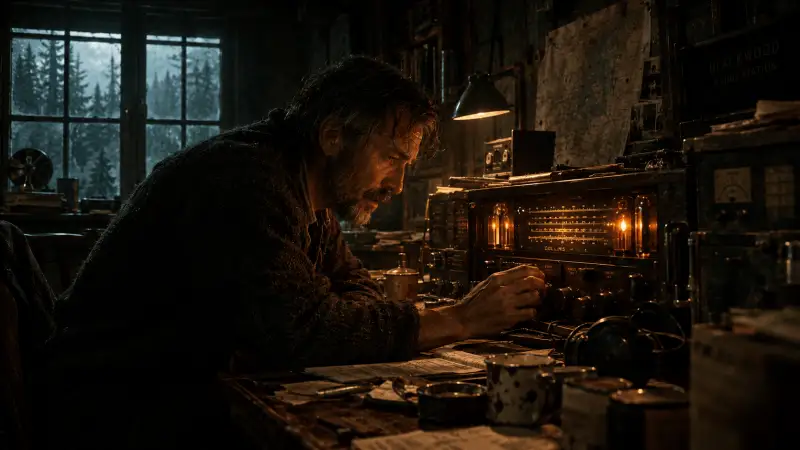
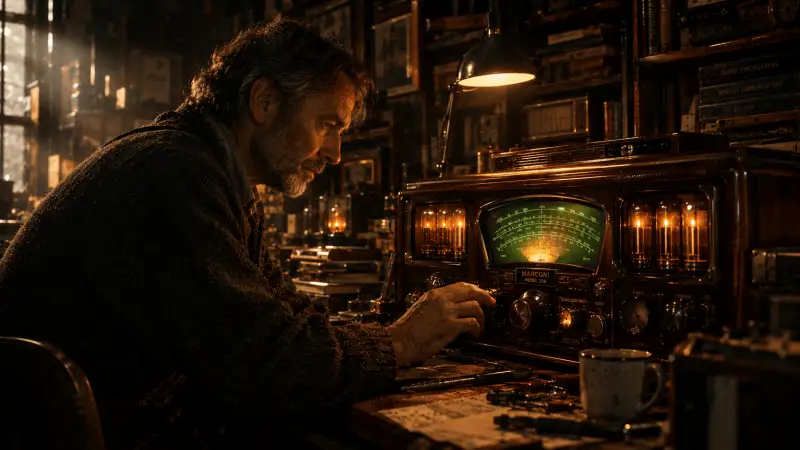
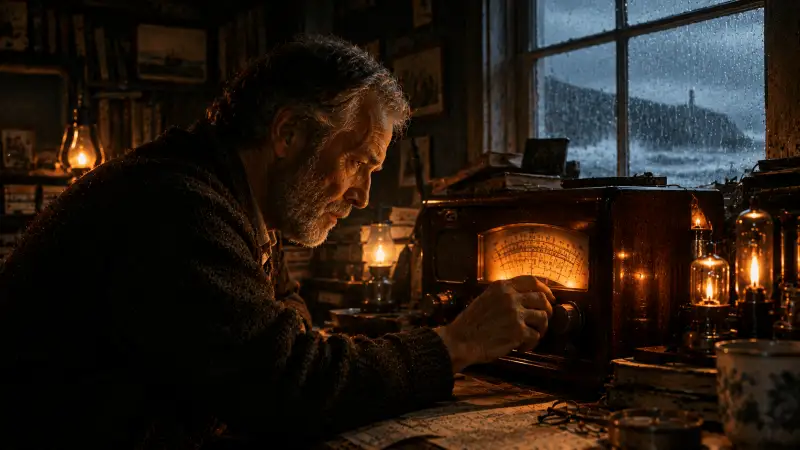
One blustery evening, as a storm rattled the old windowpanes and the wind howled like a banshee through the skeletal branches of the ancient oaks, Elias found himself in the dusty, neglected study. It was a room his father had cherished, filled with books that smelled of leather and forgotten knowledge. His gaze fell upon an old wireless radio, a behemoth of polished wood and gleaming brass, nestled amongst stacks of yellowed newspapers. It was a relic, an antique that had long since been silenced, its dials frozen in time.
A sudden, inexplicable impulse guided his hand. He turned the heavy, Bakelite knob. A crackle of static, loud and abrasive, filled the room, making him flinch. He almost turned it off, dismissing it as a futile gesture, another ghost in this house of ghosts. But then, through the hiss and pop, a faint, melancholic piano melody emerged, a tune he couldn’t quite place, yet felt strangely familiar, like a half-remembered dream.
He fiddled with the tuning dial, the brass cool under his fingers. The melody grew clearer, accompanied by a voice – low, resonant, imbued with an ancient quality that seemed to seep from the very wood of the radio itself. “Good evening, listeners,” the voice began, a warm, almost conspiratorial tone. “And welcome back to ‘The Midnight Broadcast’. Tonight, we delve into the quiet corners of memory, where echoes linger and forgotten tales await their telling.”
Elias felt a shiver trace its way down his spine. He glanced at the clock on the mantelpiece; it was well past midnight. He couldn't remember ever hearing of a station that broadcast at such an hour, with such a peculiar name. The storm outside seemed to subside, replaced by a softer, more insistent patter of rain against the glass, almost rhythmic, as if listening alongside him.
The program continued, playing a series of old folk tunes, each one infused with a bittersweet longing that resonated with the oppressive atmosphere of Blackwood Manor. Then, the host spoke again. “Sometimes, the quietest stories are the loudest, aren’t they? The ones we bury deepest, hoping they’ll stay forgotten. But the airwaves… they have a way of finding those frequencies, don’t they? Especially when a heart, weary and heavy with unspoken things, is finally ready to listen.”
Elias felt a prickle of unease. The words felt too pointed, too close to his own internal landscape. He thought of Martha’s sharp tongue, Samuel’s distant gaze, his mother’s fading light. He thought of the decades of silence, the carefully constructed walls between them. Could a mere radio show truly speak to such profound, personal grief?
He listened for hours, drawn in by the host’s compelling cadence and the strange, almost hypnotic selection of music. As dawn began to paint the sky a bruised purple, the host signed off. “Until tomorrow night, then. Keep your ears open, dear ones. The past isn’t past, not truly. It’s just waiting for the right signal.” The static returned, then silence.
Elias sat there, the weight of the night settling on him, heavier than usual. The house, usually so oppressive in its stillness, now seemed to hum with a subtle, electric energy. He found himself looking at the radio with a new kind of reverence, a strange curiosity battling with his ingrained skepticism. He knew, with a certainty that chilled him, that he would be back tomorrow night. And he had a strange feeling that he wouldn't be listening alone for much longer.
The impending arrival of his siblings now felt less like a chore and more like an unavoidable convergence, orchestrated by something far older and more mysterious than he could comprehend. The faint, almost imperceptible scent of pine and wet earth, a smell from his distant childhood, seemed to emanate from the radio itself, pulling him deeper into its enigmatic embrace.
Chapter 2: Echoes in the Static
Martha arrived two days later, her usual sharp demeanor softened only slightly by the gravity of their mother's condition. The Mercedes, gleaming incongruously against the manor’s crumbling facade, crunched on the gravel, a jarring sound in the quiet. She stepped out, a crisp suit doing little to hide the tension in her shoulders, her eyes immediately scanning the familiar yet unwelcoming landscape.
“Elias,” she greeted, her voice cool, a thin veneer over years of hurt. “How is she?”
Her gaze, however, lingered on the old radio Elias had moved from the study to the dimly lit drawing-room, where Elara’s presence still felt strongest, even when she slept. The radio now sat prominently on a small antique table, its brass gleam catching the faint light filtering through the grimy windows. It was an unusual placement, a deliberate act that Martha couldn't quite decipher.
“The same,” Elias replied, his voice flat. He offered her tea, which she accepted with a curt nod. The air between them was thick with unspoken history, a heavy curtain woven from childhood slights and adult grievances.
That evening, as dusk bled into night, Samuel arrived, his motorcycle a roar that shattered the manor’s quietude. He was younger, wilder, his leather jacket a stark contrast to Elias’s quiet conservatism and Martha’s rigid elegance. His eyes, though, held the same haunted look that Elias recognized in himself. He hugged Elias awkwardly, a brief, stiff embrace, then offered Martha a wary smile. Their reunion was less a gathering and more a reluctant assembly, each sibling a satellite pulled into the manor's decaying orbit by the weakening gravitational pull of their mother.
Later, as the grandfather clock in the hall chimed midnight, Elias felt an undeniable pull towards the drawing-room. He found Martha already there, her fingers tracing the smooth wood of the radio, a strange fascination in her usually cynical eyes. Samuel, drawn by the faint murmur, soon joined them, leaning against the doorframe, arms crossed, a skeptical smirk playing on his lips.
“What’s this, a séance?” he quipped, but his gaze, like Martha’s, was fixed on the antique device.
Elias, ignoring the jibe, reached for the dial. The familiar static filled the room, then the host’s voice, a soothing balm against the night’s chill. “Welcome back, dear listeners, to ‘The Midnight Broadcast’. Tonight, we’re venturing into the archives of memory, specifically to the summer of ’87, a season of unspoken words and a misplaced locket.”
Martha stiffened. Elias saw her hand clench. The summer of ’87. The year their grandmother, Elara’s mother, had died. The year Martha had accused Elias of stealing her locket, a treasured heirloom from their grandmother, sparking the first major rift between them. Elias had vehemently denied it, a denial that had only fueled Martha’s resentment.
The radio played a jaunty, innocent tune from that era, a cruel juxtaposition to the raw emotion the host’s words had evoked. Then, the host continued, his voice softer, more reflective. “A locket, not stolen, but hidden. A small act of childish fear, a desperate attempt to hold onto a memory too fragile for young hands. Hidden beneath the loose floorboard in the attic, near the old rocking horse.”
Martha gasped, a sharp intake of breath. Her eyes, wide with disbelief and a flicker of something akin to dawning understanding, darted between Elias and the radio. Elias felt a cold sweat break out on his brow. The rocking horse. He remembered. A fleeting memory, buried deep, of him playing a game, hiding things, wanting to keep something of his grandmother’s for himself, not understanding the weight of its significance to Martha. He’d forgotten it completely, until now.
Samuel, initially amused, now watched his siblings with a growing sense of unease. The radio’s words had struck too close, too precisely. It wasn’t just a coincidence.
The broadcast shifted, playing a melody that Samuel’s band used to cover in their rebellious youth, a song that brought back the sting of his father’s disapproval, a constant refrain throughout his teenage years. The host’s voice returned, speaking of ambition and misunderstanding. “Sometimes, a father’s silence isn’t judgment, but a fear of losing what he loves. A fear that a son’s soaring wings might take him too far from the nest, a fear he couldn’t articulate.”
Samuel’s cynical mask cracked. He ran a hand through his hair, his eyes fixed on the radio, a flicker of raw emotion – anger, confusion, and a hint of longing – crossing his face. The air in the room crackled, not just with static, but with the palpable tension of old wounds being reopened, not by their own words, but by the disembodied voice from the old wooden box. The rain outside intensified, a drumming rhythm against the windows, as if the heavens themselves were listening to the unveiling of Blackwood Manor’s secrets.
Chapter 3: The Unspoken Airwaves
The following nights transformed the drawing-room into a strange, communal confessional. The siblings, though still guarded, found themselves drawn to the radio, an unspoken agreement solidifying their nightly vigil. They’d gather, Elias often meticulously cleaning the dial, Martha perched on the edge of an armchair, and Samuel leaning against the cold marble fireplace, each posture a reflection of their varying degrees of acceptance and skepticism. But each night, 'The Midnight Broadcast' would peel back another layer of their shared, painful history.
One evening, the host’s voice, imbued with a gentle melancholy, began to describe a specific autumn day, years ago. “The scent of burning leaves, the crisp snap of an apple, and a small, hopeful voice asking for a simple game of catch. A voice unheard, overshadowed by the rustle of important papers and the silent burden of a responsibility too heavy for young shoulders.”
Elias felt a tightening in his chest. He remembered that day vividly, though he hadn’t thought of it in decades. Samuel, then a small boy, had approached him, his face bright with anticipation, a worn baseball glove clutched in his hand. Elias, barely an adult himself, had been consumed by the recent death of their father, the sudden weight of the family business, and the overwhelming grief that had silenced his mother. He’d waved Samuel away, a curt gesture he’d instantly regretted but had been too proud, too overwhelmed, to rectify. Samuel had simply deflated, his small shoulders slumping, and walked away. The memory, replayed by the radio, was a fresh wound. Samuel, across the room, shifted uncomfortably, his jaw clenching. He hadn't spoken of that day in years, had perhaps even consciously suppressed it, yet the radio had found it, plucked it from the recesses of his memory.
Then, the broadcast pivoted, the host’s voice taking on a more philosophical tone. “We build walls, don’t we? Brick by brick, from misunderstandings and unsaid words. We tell ourselves it’s protection, but often, it simply traps us in our own lonely castles.”
A haunting, almost spectral rendition of an old lullaby filled the air, a tune Elara used to sing to them when they were children. Martha, usually so composed, felt a tremor run through her. The lullaby brought back not just comfort, but the sharp pang of a memory she’d buried. The host continued, his voice a soft murmur that seemed to fill the very space between them. “And sometimes, the deepest cuts aren’t from daggers, but from the silence of those we love. The expectation of support, unmet. The words of comfort, withheld.”
Martha remembered her desperate need for her mother’s comfort after a particularly brutal break-up in her early twenties. Elara, then consumed by her own quiet grief over her husband's recent passing, had offered only a stoic pat on the hand, a brief, wordless embrace. Martha had interpreted it as a lack of care, a dismissal of her pain, when perhaps it was simply Elara's own inability to give what she herself lacked. The radio was not just recounting events; it was offering interpretations, perspectives they had been too caught up in their own narratives to consider. It was a mirror, reflecting their unexamined assumptions, their rigid viewpoints.
“She couldn’t give what she didn’t have, dear one,” the host whispered, as if speaking directly to Martha. “Her well was dry, her own heart a barren field. Sometimes, the greatest love is shown not in what is given, but in what is silently endured.”
Martha’s eyes welled up, tears she hadn't shed in years finally threatening to spill. The weight of her resentment, so heavy for so long, suddenly felt lighter, imbued with a new, complex understanding. It wasn't an excuse, but it was a different lens through which to view her mother’s perceived coldness.
Elias watched his siblings, a silent observer of their unraveling. He recognized their pain because it mirrored his own. The radio had a way of cutting through their defenses, of laying bare the raw nerves of their shared history. He found himself thinking of his own quiet pride, his inability to express his overwhelming grief after their father’s death, the way he had retreated, believing he had to be strong for everyone, inadvertently pushing them all away.
The airwaves seemed to vibrate with a palpable energy, a strange, electric current that pulsed through the old manor, connecting them all, whether they wanted it or not. The unspoken things, the things they’d carried like secret burdens for decades, were finally finding voice, not through their own hesitant words, but through the enigmatic medium of 'The Midnight Broadcast'. And with each revelation, a fragile, almost imperceptible thread began to weave itself between them, a prelude to a dialogue long overdue.
Chapter 4: A Harmony of Fractures
The nightly ritual continued, each broadcast a new chapter in their family’s unwritten saga. The air in the drawing-room, once thick with tension and unspoken animosity, now carried a different charge – one of vulnerability, of tentative connection. Elara, though still largely unresponsive, seemed to stir more frequently during the broadcasts, her eyes occasionally flickering open, a faint, almost imperceptible smile playing on her lips at certain melodies. It was as if the radio show was not just for them, but for her too, a final lullaby to soothe her on her journey.
One evening, the host’s voice, imbued with a profound sense of longing, spoke of a particular summer picnic, long ago. “The taste of strawberry pie, the warmth of a setting sun, and a shared secret whispered under the ancient oak. A promise, made in innocence, broken by the cruel hand of circumstance and misconstrued by grieving hearts.”
Elias remembered it instantly. The last family picnic before their father’s accident. He and Martha, teenagers then, had overheard their parents talking, hushed tones about financial troubles, about their father’s desperate plan to sell a small, sentimental piece of land that had been in the family for generations – a wooded parcel near the old creek, where they used to play. Elias had promised Martha he’d stop it, convinced it was a betrayal of their heritage. But their father died before he could act, and the land was sold anyway, a bitter necessity Elara had handled in her grief-stricken haze. Martha had never forgiven Elias, believing he had broken his sacred promise, that he hadn’t fought hard enough.
“He couldn’t,” the radio host interjected, his voice soft, as if speaking directly into Martha’s ear. “He was just a boy, drowning in his own sudden sorrow, burdened by a responsibility thrust upon him too soon. And sometimes, promises are broken not by malice, but by the overwhelming, unforgiving tide of fate.”
Martha, her eyes fixed on the glowing dial, finally broke. “You promised, Elias!” she choked out, her voice raw, tears streaming down her face. “You promised me you’d never let them sell the creek land! It was everything to me!”
Elias, for the first time in decades, didn’t defend himself with logic or anger. He simply looked at her, his own eyes welling. “I know, Martha. I remember. I was going to. I really was. But then… then he was gone. And I just… I couldn’t. Everything was chaos. I was just trying to keep us afloat.” His voice cracked. “I’m so sorry.”
The words, simple and heartfelt, hung in the air, heavier and more potent than any accusation or defense. Samuel, witnessing this raw exchange, felt a knot in his own chest loosen. He understood now the quiet burden Elias had carried, the impossible expectations placed on him.
Then, the broadcast turned its attention to Samuel. “And the artist, whose spirit yearned for freedom, saw only cages. The quiet admiration, mistaken for disapproval. The longing for connection, misread as a desire for conformity.”
Samuel remembered his father, a man of few words, always meticulously dressed, a stark contrast to Samuel’s bohemian aspirations. He had always felt his father silently judged his music, his dreams of being a musician. He saw only the frowns, not the subtle pride in his father’s eyes when Samuel played an intricate guitar riff, or the way his father would discreetly buy tickets to his small, local gigs, never attending, but keeping the stubs in his desk drawer.
“He wanted you to be safe, Samuel,” the host’s voice resonated, warm and understanding. “He saw the struggles he endured, and he wanted a path free of them for his son. His love was a shield, not a cage.”
Samuel finally understood. His father hadn’t disapproved of his music; he had been afraid for him. The realization hit him with the force of a physical blow. He looked at Elias, at Martha, a fresh wave of understanding washing over him. Their father, Elara, all of them had been navigating their grief, their fears, their love, in their own imperfect ways.
“We’ve all been listening to the static, haven’t we?” Samuel murmured, his voice hoarse, looking around at his siblings. “Hearing only what we expected to hear.”
Martha nodded slowly, wiping her tears. “And saying nothing,” Elias added, his voice thick with emotion.
The silence that followed was different now, not heavy with unspoken words, but with the quiet hum of dawning empathy. The fractures hadn't vanished, but a fragile harmony was beginning to emerge, woven together by the unseen threads of ‘The Midnight Broadcast’. The wind outside Blackwood Manor, which had been howling for days, finally softened to a gentle sigh, as if in agreement.
Chapter 5: The Last Broadcast
The dawn broke over Blackwood Manor, painting the sky in hues of bruised purple and soft rose, a stark contrast to the monochrome of their emotional landscape just days prior. Elara, whose breathing had grown even more shallow overnight, lay peaceful, her face etched with the wisdom of a long life. The siblings sat around her bed, no longer estranged figures but a huddled unit, holding hands, a silent pact of rediscovered kinship. The radio, which they had moved to her bedside table, was silent, its dial dark.
As the first sliver of sunlight touched Elara’s face, her eyes fluttered open. She looked at each of her children, a lucid warmth in her gaze that hadn’t been there for weeks. A faint smile touched her lips. “The broadcast,” she whispered, her voice barely audible, but clear. “Did you… did you hear it all?”
Elias squeezed her hand. “We did, Mother. We heard it all.”
Martha leaned closer, tears in her eyes. “We understand now, Mama. So much.”
Samuel, his voice thick with emotion, simply nodded, a silent promise of forgiveness in his gaze.
Elara’s eyes drifted to the radio, then back to her children. “Your father,” she murmured, a gentle sigh escaping her lips. “He loved you… so fiercely. He tried… he tried to tell me. About the show. About the stories.” She paused, her breath catching. “He built it, you see. For me. For us. After… after he knew.”
The revelation hung in the air, a final, profound piece of the puzzle. Their father, a man of quiet passions and hidden depths, had been the architect of this magical conduit, a posthumous attempt to heal the very wounds his absence had exacerbated. It was a love letter, broadcast across time and sorrow.
Elara closed her eyes again, a serene peace settling over her features. “Listen,” she whispered, her voice fading to a mere breath. “The last song.”
Elias, with trembling fingers, reached for the radio. He didn’t even need to turn the dial. As his hand brushed the cold brass, the radio sprang to life, not with static, but with a crystal-clear melody, a hauntingly beautiful folk tune their mother used to hum when they were children. It was a melody of home, of loss, of enduring love. And then, the host’s voice, for the very last time.
“And so, the final broadcast comes to a close. Some stories are told not to accuse, but to connect. Not to open wounds, but to offer salve. For the greatest magic of all… is the silent language of a family’s heart, finally, truly heard.”
As the last note of the song faded, Elara exhaled, a soft, almost imperceptible sigh, and then, her breath was still. The sun, now fully risen, streamed through the window, bathing the room in a golden glow, illuminating the dust motes dancing in the air, each one a tiny, shimmering memory. The radio clicked, a soft, final sound, and then fell silent, its glowing dial dimming, never to light up again. The broadcast was truly over.
The siblings sat in the quiet, a different quiet now, one not of estrangement but of shared grief and newfound understanding. There were tears, yes, but also a sense of catharsis, a quiet peace that had been absent from Blackwood Manor for decades. The locket Martha had lost so long ago, found in the attic where Elias had hidden it as a boy, now rested in her hand, a tangible symbol of a memory reclaimed and a misunderstanding forgiven.
Samuel, no longer restless, looked at the old house with new eyes, seeing not a cage, but a repository of stories, of love, of magic. Elias, the stoic eldest, felt the heavy mantle of responsibility lift, replaced by the lighter, warmer weight of connection.
They buried Elara beside their father under the ancient oak, the creek gurgling nearby, a peaceful murmur. Blackwood Manor, though still old and grand, felt different now. The ghosts that had haunted its halls were not banished, but understood, their whispers now a comforting hum of shared history. The radio sat in the drawing-room, a silent sentinel, a reminder of the magic that had brought them back to themeselves, and to each other. The family was together again, not perfectly mended, but undeniably woven, a rich tapestry of memory, forgiveness, and the enduring, magical hum of a love that had finally found its frequency.
Conclusion
The story of The Radio Show That Brought an Old Family Together reminds us that healing family trauma begins when we choose to listen. Though distance and miscommunication can pull siblings apart, shared memories and forgiveness have the power to bring an old family together once again. For additional classic short stories, explore our literary narrative library